Linda Ballou Shares Her Five Favorite Southern California Botanical Gardens
By Linda Ballou, NABBW’s Adventure Travel Associate
Descanso Gardens
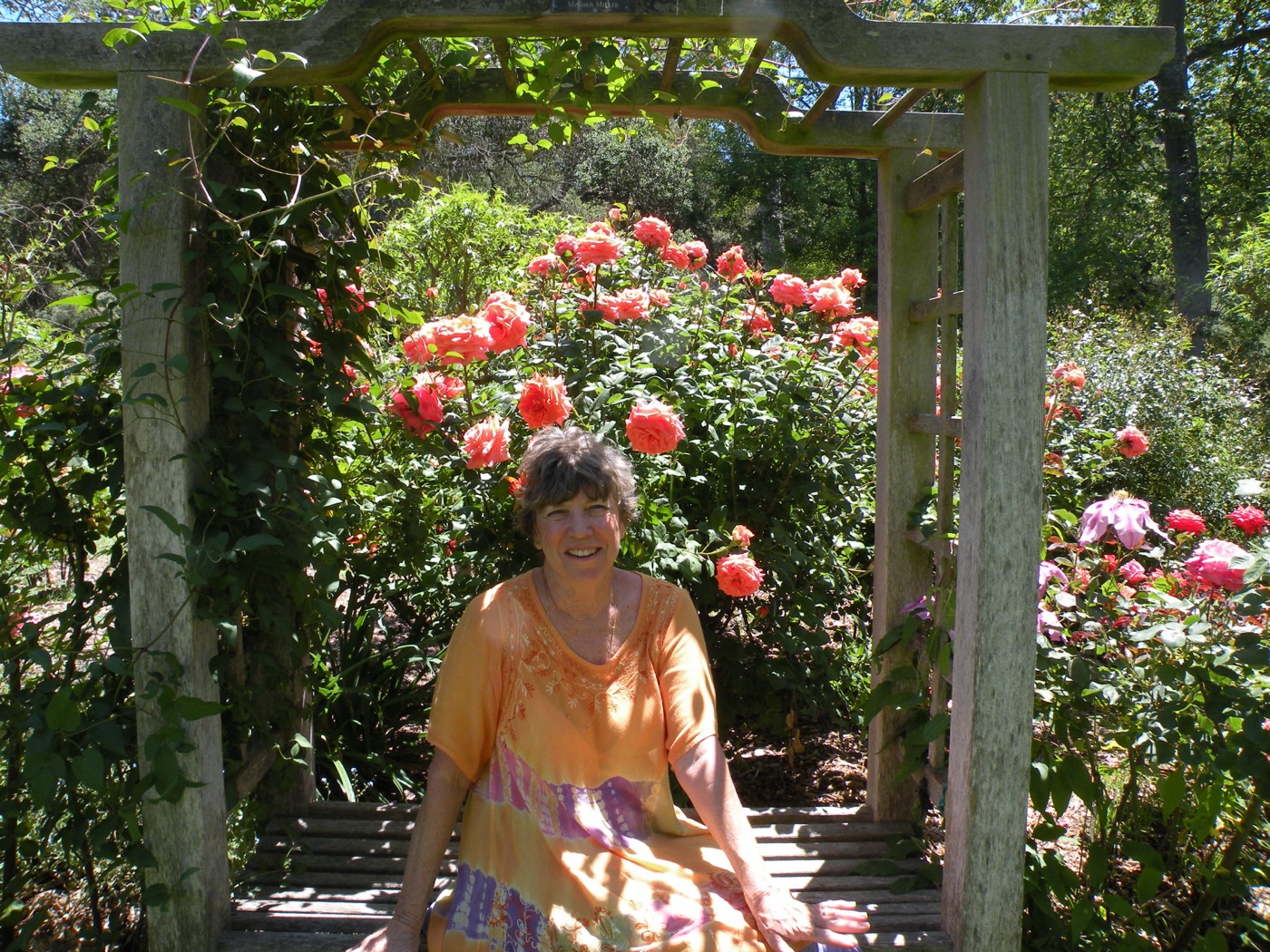
Linda Ballou in the Descanso Rose Garden. All photos courtesy the author.
The Descanso Gardens, a 150-acre botanical garden and living museum in La Canada Flintridge, is known for its diverse plant collections. It features themed gardens, walking trails, and the “Enchanted Railroad,” a ride-on train. A year-round oasis, just 20-minutes from downtown Los Angeles, it also hosts a variety of events, as well as art installations, and educational programs.
Each Spring, I eagerly wait for their tulip display to bloom. It is such a delight to see the rich, dense colors and variations. The tulips mark the beginning of the extravagant profusion of flowers in the Southern California gardens.
Another Spring treat bursts forth when the Descanso Japanese Gardens comes alive with pink cherry blossoms and magenta azalea as seen in the photo below. This garden includes several distinctive architectural elements. First is a teahouse designed by San Marino architect Whitney R. Smith, complete with a roof crafted from blue tiles imported from Japan. The garden also includes a minka designed by Kenneth Masao Nishimoto. Built in 1969, the minka is modeled after the traditional Japanese farmhouse.
From there, as you carry on through a forest trail, you reach the Boddy House, where local artists share their visions of the garden. Meander on trails through the forest of camellia trees — prized evergreen plants known for their glossy leaves and vibrant flowers — here in brilliant reds and tender pink.
Enjoy tranquility on the paths framing the lake, where you will run into poppies and other wild flowers native to California. Have an intimate moment in one of the many seating areas, shaded by oaks that have stood the test of time for hundreds of years.
You can easily walk the trails in half a day and top off your walk with a casual lunch on the patio, or a more formal meal in the restaurant. I always return in May or June to walk the Rose Garden, marveling at the profusion of roses blooming against a backdrop of the San Gabriel Mountains.
Huntington Library, Art Museum and Botanical Gardens
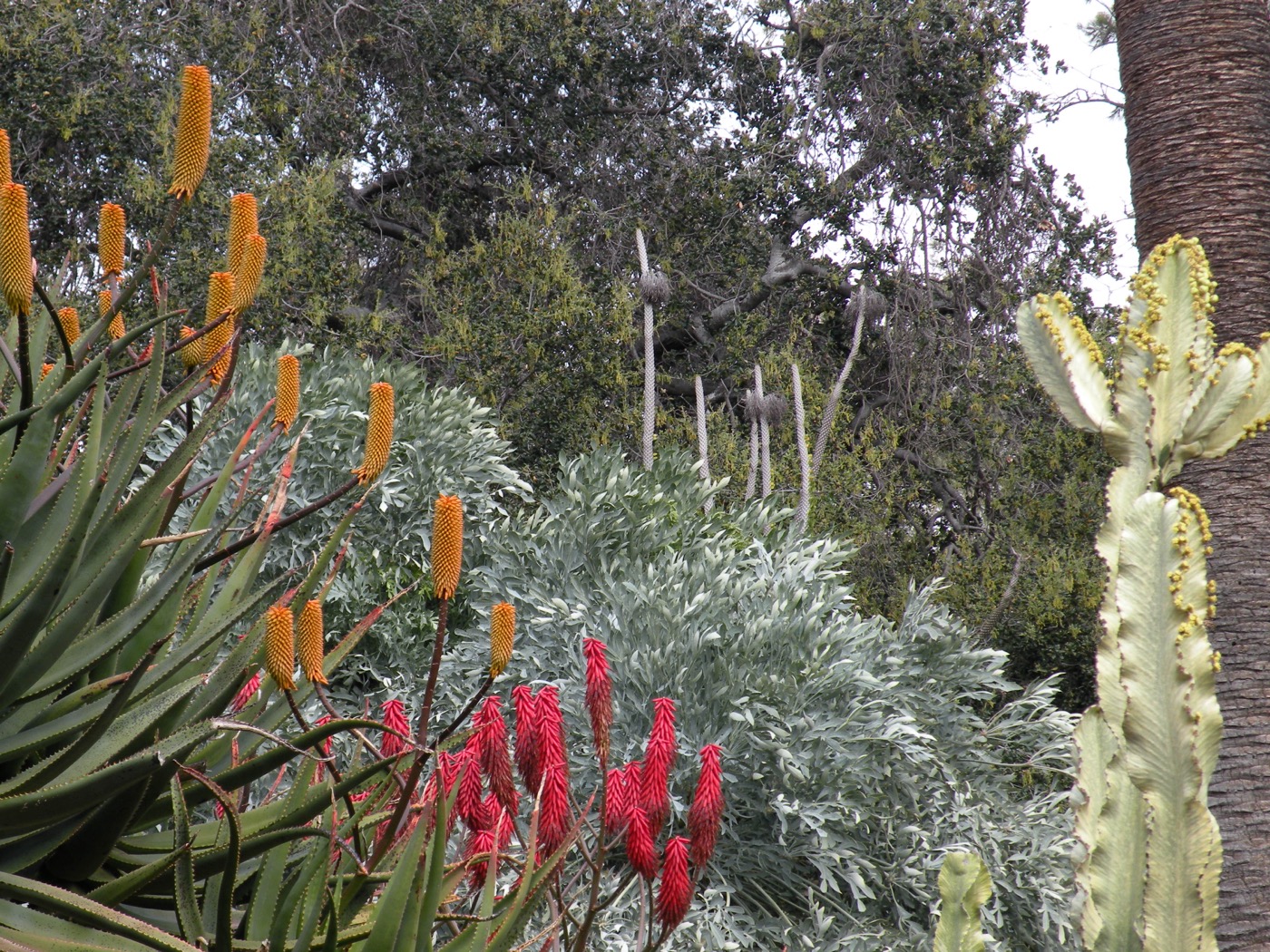 If you’re going to be near San Marino, California, plan to reserve a full day to fully explore this vast, world famous garden. It features 120 acres composed of 16 themed gardens, an art museum boasting significant European and American paintings, including Gainsborough’s delightful “The Blue Boy,” and a world-class library which features millions of items including manuscripts, photographs and rare books.
How rare are the books? Think about this: A Gutenberg Bible, a copy of Chaucer’s Canterbury Tales and a copy of Shakespeare’s First Folio (This being the first printed collection of 36 of his plays, published posthumously by his friends, in 1623. Of the roughly 750 books originally printed, a total of only 235 First Folios are known to exist today.)
Originally the estate of Henry E. Huntington, an American railroad magnate, you’ll need advance online reservations on weekends, holidays and peak seasons — and I strongly recommend them on weekdays as well. You can enjoy free admission on the first Thursday of each month with advance reservation. The Huntington is open daily 10:00 AM to 5:00 PM and closed on Tuesdays. To reserve your day, become a Member or give a gift of a membership, consult the website.
I love the opportunity to tune in with nature and find healing among the trees during their “Restore + Explore: Forest Bathing” events held periodically at various garden locations. For more information on this, consult the website. Participants will join Certified Forest Therapy Guide Debra Wilbur in the gardens to explore pathways that promote emotional and physical well-being.
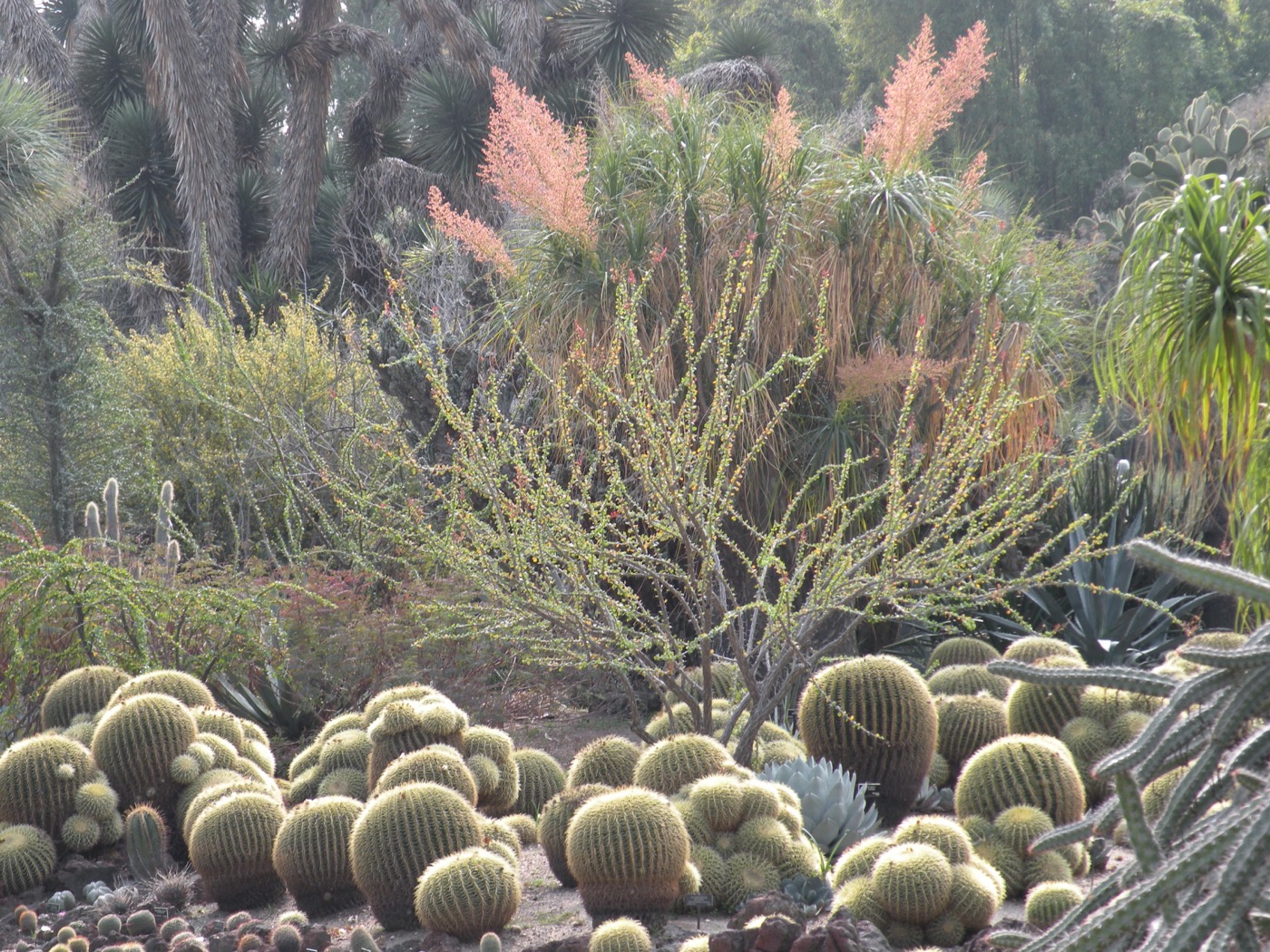
The rose gardens are dense with blooms that make honey bees swoon. An arbor dangling lavender wisteria draws you into exploring more of this enchanting wonderland of flowers. I love to ramble through the otherworldly desert garden with twisted arms and bulging barrels covered with thorns.
Intriguing formations fire the imagination. Then be sure to wander through the forest of trees from Australia, Africa, and other distant lands. The trail takes you to a vast meadow with a lily pond where you may enjoy a quiet moment in the shade. I have been here many times and still have not seen all the wonders of the Huntington grounds.
There is a tea house with a full menu for more formal affairs at the main entrance. The Huntington offers 130 acres of beautiful and biodiverse gardens! Check the map on the website to locate the Chinese Garden, Japanese Garden, Australia Garden, Subtropical Garden, and Desert Garden.
I love to lunch in the small, intimate venue in the Chinese garden. The garden is famous for the Library and the Art Gallery, with walls lined with works by masters. Check the calendar for upcoming events and buy your ticket online before your visit. It is worth the $35 price of admission.
Ventura Botanical Garden
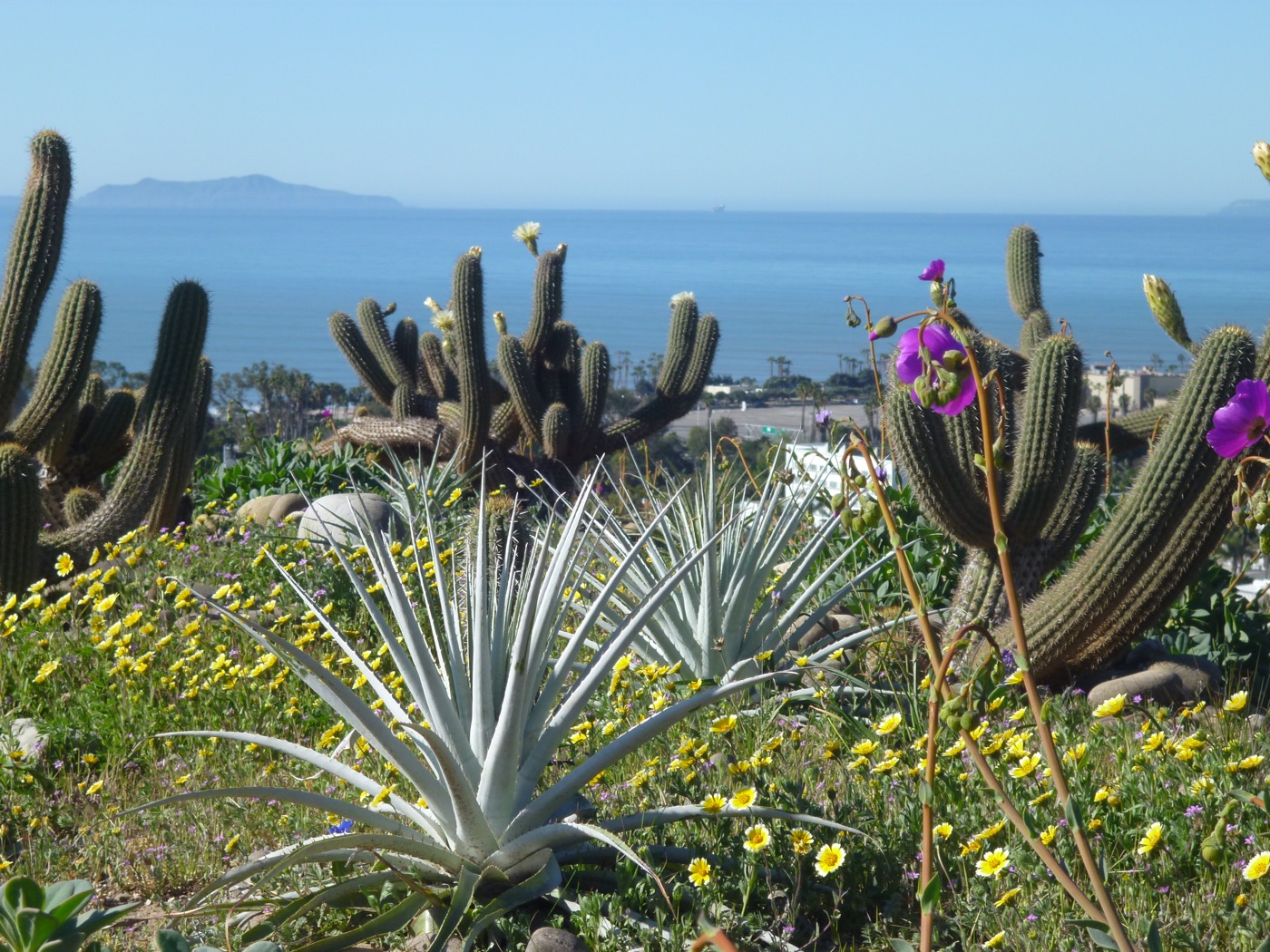
The folks in Ventura love the outdoors and have created a fabulous Botanical Garden that begins just behind the City Hall at the top of California Street. It snakes up a canyon switch-backing through rock gardens planted with succulents and cactus found in the various Mediterranean climes around the globe.
It is an easy climb to flower-embellished meadows and vistas that extend from Boney Ridge, overlooking Camarillo to the south, to the Channel Islands, prominently visible on the horizon.
I met the “Social Climbers,” a band of retired teachers, many young women with babies strapped to their chests, and a host of mutts on leash, followed by proud owners. Come early, as there is little shade, and it is a popular trek.
With over 120,000 plants in the ground, the Gardens represent the five Mediterranean climate zones of the world: Chile, the Cape of South Africa, Australia, the Mediterranean Basin, and California. These low-water climate zones, like Ventura, allow for long-term sustainability and are designed to replicate plant communities as they occur in nature. Free tours are also available.
Santa Barbara Botanical Garden
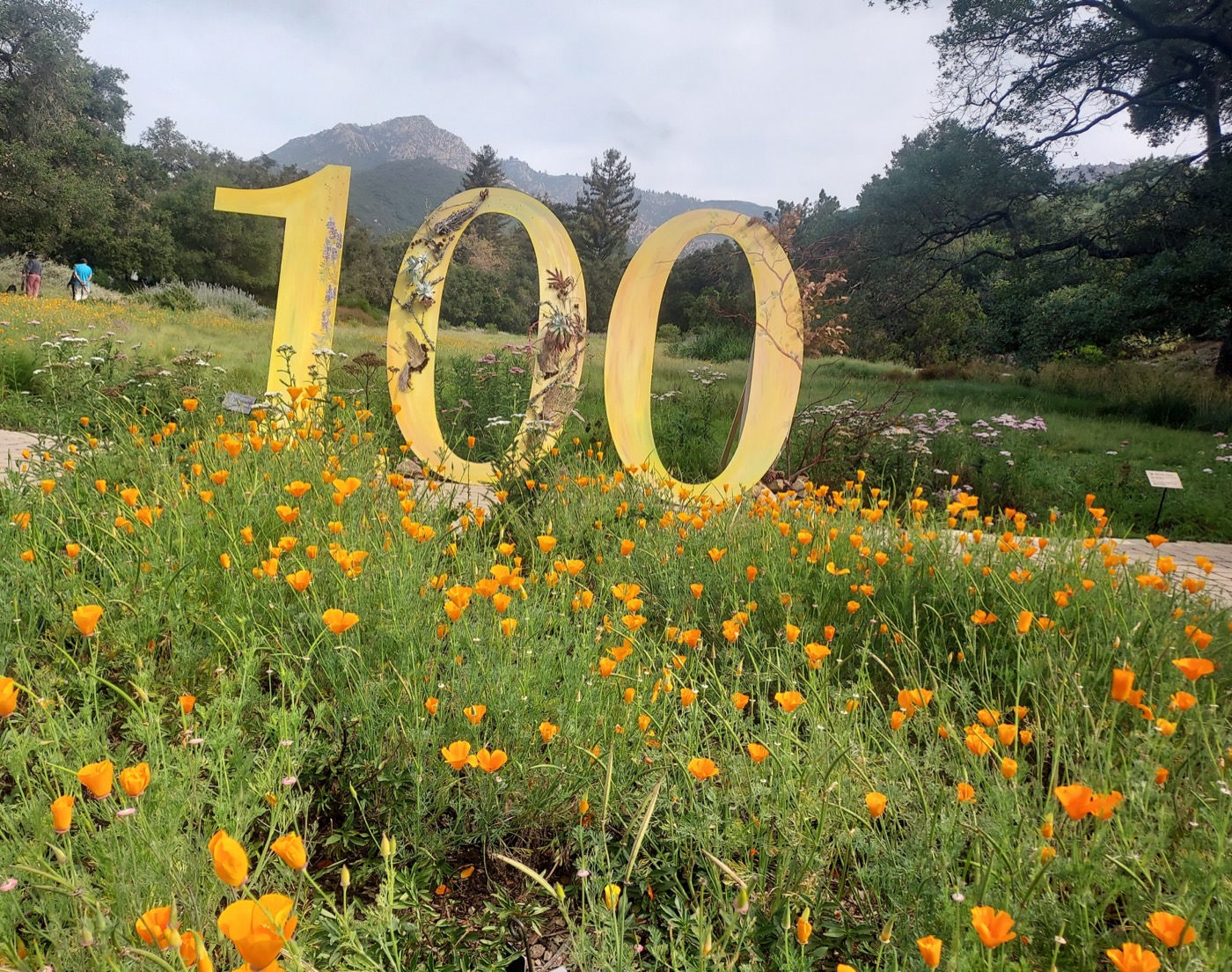 I can’t go to Santa Barbara without making a stop at this sweet display of indigenous plants tended by volunteers. This year, 2026, marks the 100th anniversary of the garden dedicated to preserving California native plants and trees.
The meadow, blanketed in smiling orange poppies, spiked with purple larkspur, with Arlington Peak as a backdrop, always excites my senses.
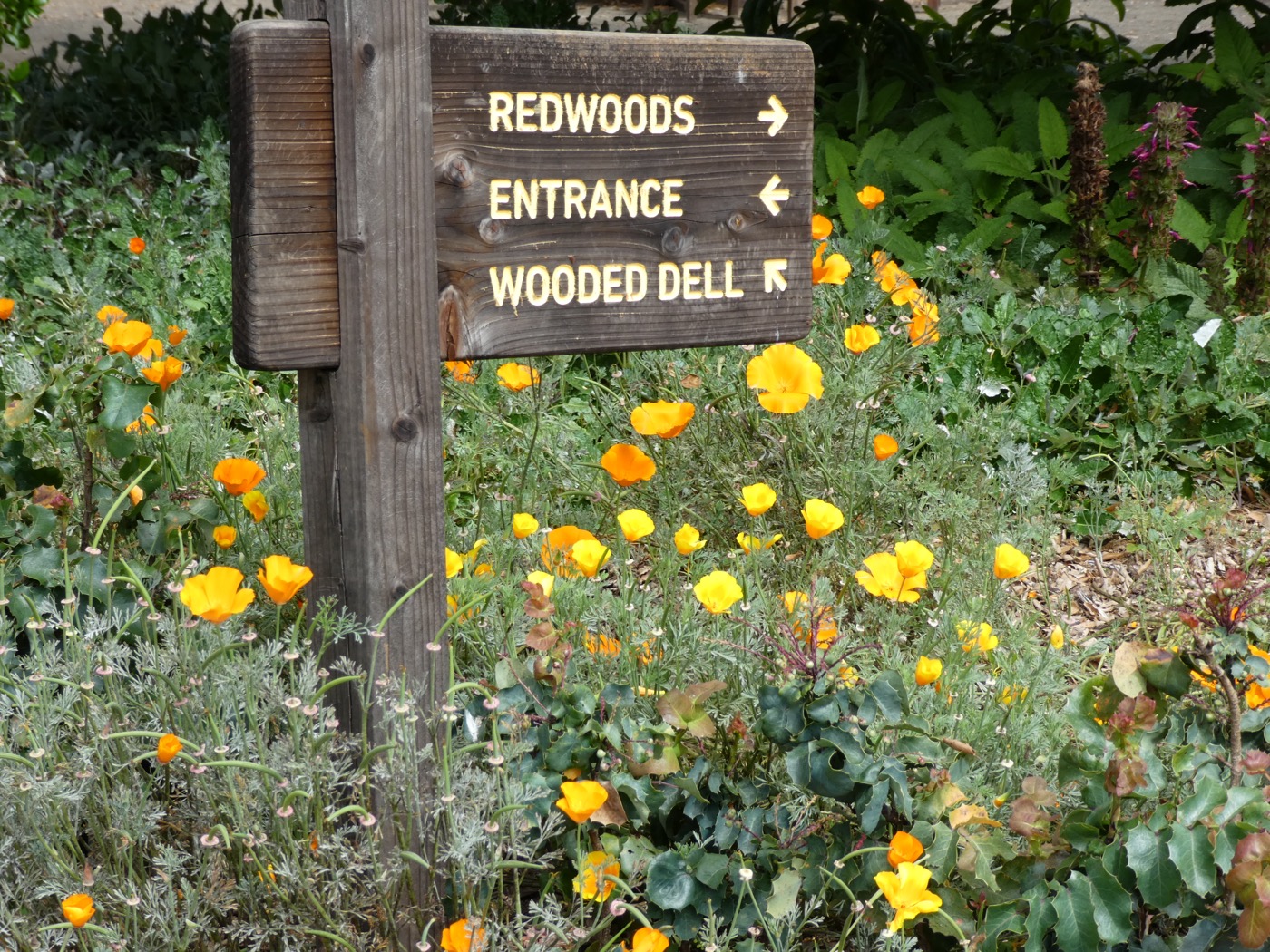
A stroll through a grove of redwood trees takes you to a tree-shaded canyon carved by Mission Creek. Giant ferns and frilly mosses line the path. The trail continues along the foothill for a gentle walk through sycamore trees beside the creek.
There are more advanced trails for those who need a workout. A bridge over the stream loops you back to the nursery, where you can purchase indigenous plants. Stop in the gift shop for unique gifts made by local artists.
Since my last visit, new trails have been planted with native plants, leading to distant vistas of the sparkling Pacific. This sweet garden was home to the Chumash Indians, who lived on the land for thousands of years. Volunteers and donations maintain the garden for all of us to enjoy. Plan your visit and check the calendar for events.
Lotusland
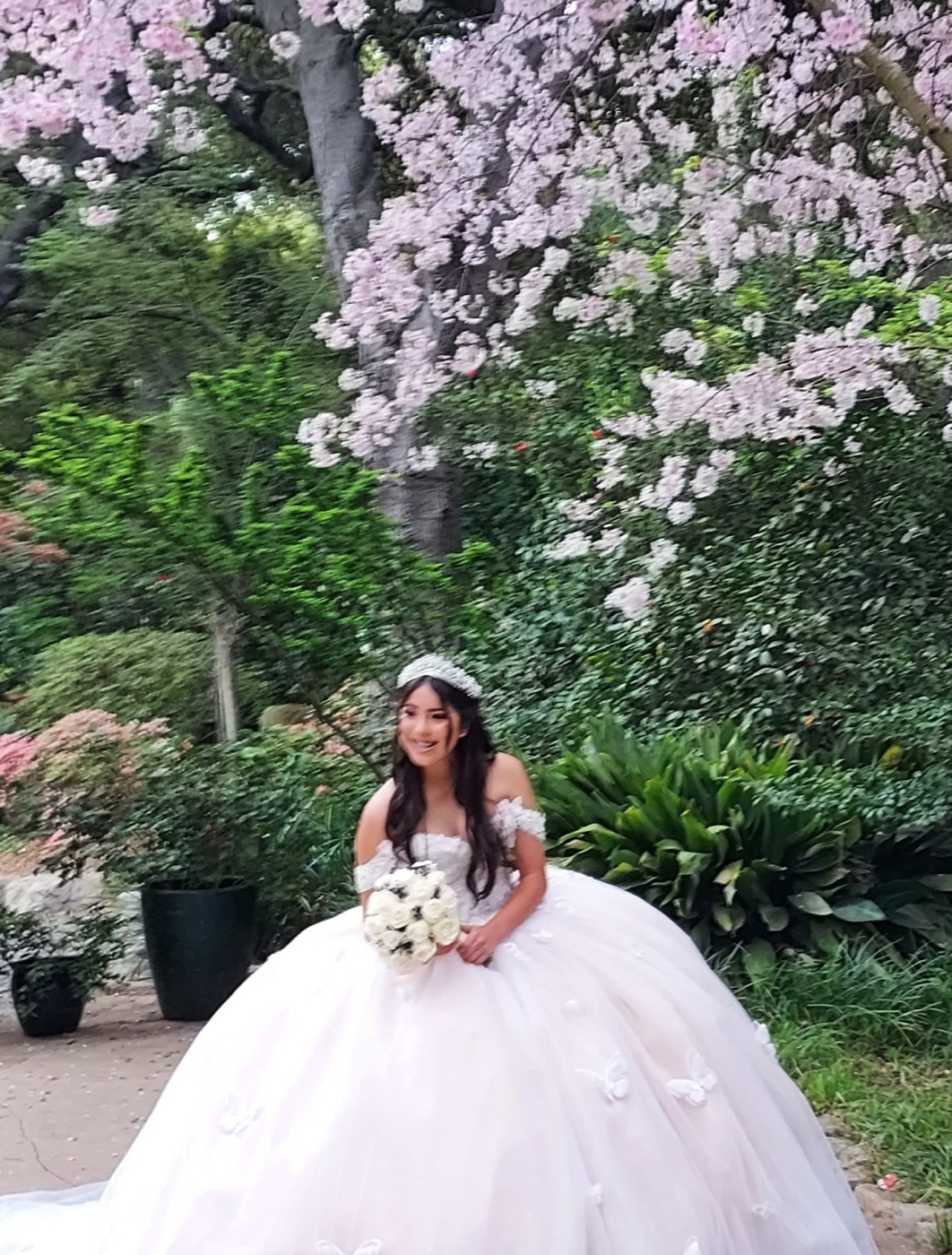
A beaming young lady celebrating her quinceanera poses for a magical photographic memory of her special day in the Descanso’s Japanese garden.
Tucked in a residential area of Montecito, this garden is considered one of the top 10 in the world. Madam Ganna Walska, a concert singer who owned a theater in Paris, purchased the 37-acre estate in 1941. She turned it into a magical oasis for the plants and trees she collected from around the globe.
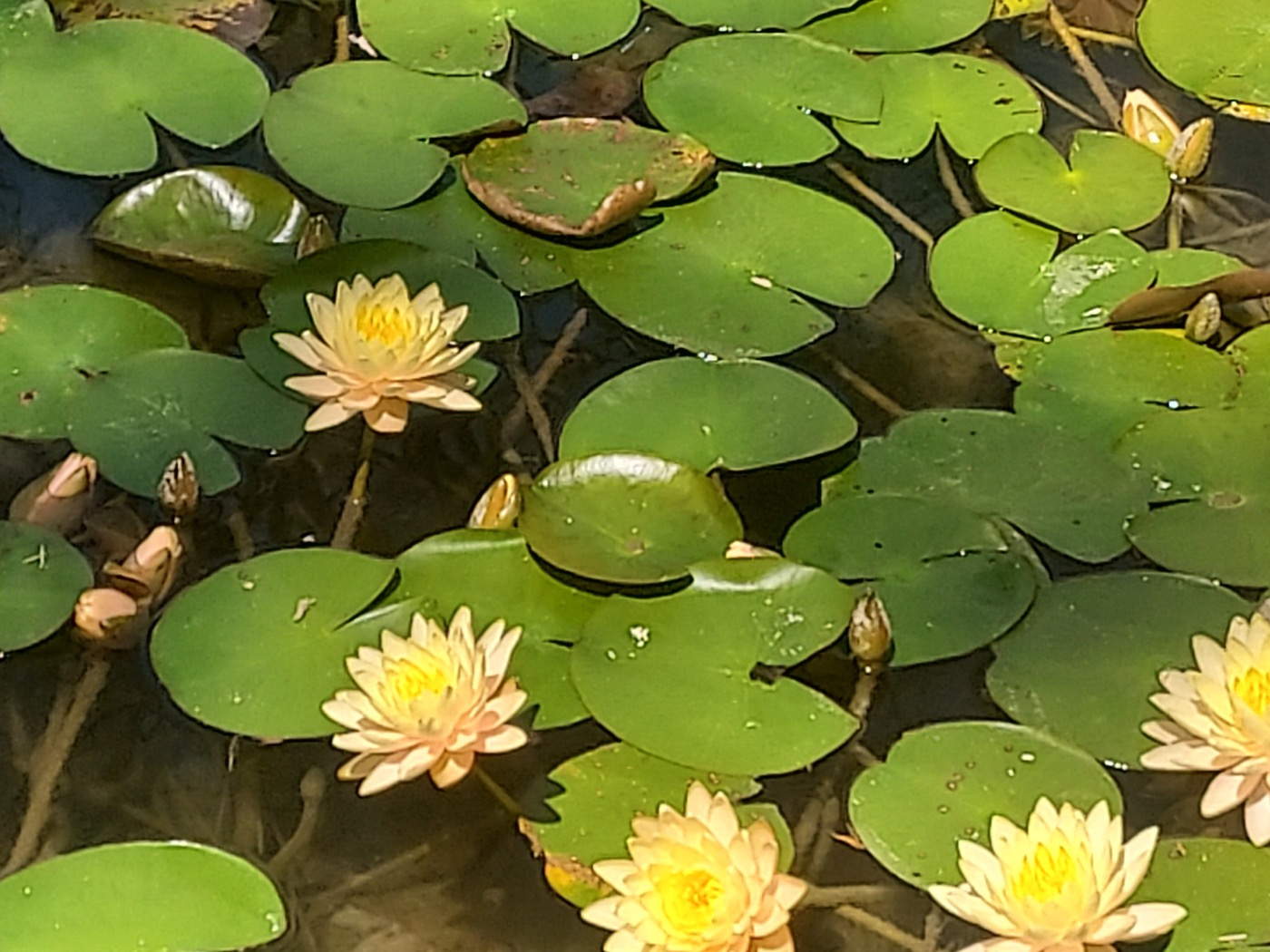
You are allowed only 2 hours to explore the many garden rooms she created, so the garden is never overrun, allowing you to experience its wonders in tranquility. Upon entering, you find yourself in a serene Japanese garden replete with a waterfall and a lake laced with yellow lotus.
As you meander, you will discover the Blue Garden, a turquoise pool framed in giant clam shells. Around each turn is another discovery. In front of her home, there are structured rose gardens, framed by hedges, and water elements that one might see in a French Château.
Wander a bit further, and you are in a circle of topiary animals. Then a stroll through an arbor brings you to native plants such as poppies, lupine, and sage. Birds flutter throughout the park. Bizarre formations create a canopy in the Australian garden.
This park is a wonder of plant conservation and imaginative design. You can self-guide with a map in hand, but the additional fee for a docent guide will ensure you don’t miss a garden room and provide insights into what Madam Walska was trying to achieve.
The tropical garden is closed at this time because the Foundation has determined to create a larger water cistern to make the garden more environmentally sustainable. There is a professional video on the website that gives you a good overview of what to expect to see on your visit.
You must make reservations and turn up at the allotted times. There is no street parking, and parking inside the garden is limited.

 Linda's mission is to experience as many beautiful places on our planet as she can before they are no more. Travel tales relating her experiences while kayaking, horseback riding, sailing, birding and hiking about the globe have appeared in numerous national magazines. She had great fun collecting travel stories, and profiles of people she met in “naturally high places” for her book, Lost Angel Walkabout-One Traveler’s Tales. Her latest book Lost Angel Unleashed is the third book in her Lost Angel Trilogy
Go to LostAngelAdventures.com for more adventures.
For more about Linda’s novels and media offerings go to. www.LindaBallouAuthor.com
Linda's mission is to experience as many beautiful places on our planet as she can before they are no more. Travel tales relating her experiences while kayaking, horseback riding, sailing, birding and hiking about the globe have appeared in numerous national magazines. She had great fun collecting travel stories, and profiles of people she met in “naturally high places” for her book, Lost Angel Walkabout-One Traveler’s Tales. Her latest book Lost Angel Unleashed is the third book in her Lost Angel Trilogy
Go to LostAngelAdventures.com for more adventures.
For more about Linda’s novels and media offerings go to. www.LindaBallouAuthor.com